
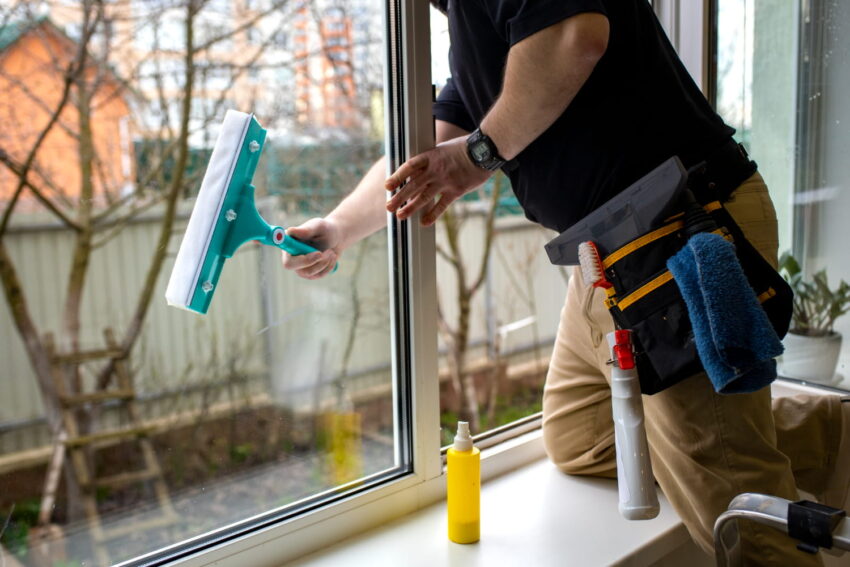
Hard water spots and mineral buildup on exterior windows are a common problem — especially in areas with high mineral content in the water supply. Sprinklers, rainwater runoff, and condensation can leave behind white, hazy, or chalky spots that make your windows look dirty even after cleaning. Over time, these deposits can etch into the glass, making them even harder to remove.
The good news is that with the right techniques and tools, you can safely restore the clarity and shine of your exterior windows.
What Causes Hard Water Spots?
Hard water contains dissolved minerals such as calcium and magnesium. When water dries on glass, these minerals are left behind, forming:
- White rings or dots
- Cloudy film
- Crusty buildup along the edges
- Streaking that won’t wipe away with normal cleaning
If left untreated, mineral deposits can bond to the glass surface, making removal more challenging.
Start With a Gentle Cleaning First
Before treating the hard water stains, begin with a basic window cleaning. This removes dirt and grime, so you’re only targeting the mineral buildup itself.
Use:
- Mild dish soap
- Warm water
- A soft microfiber cloth or sponge
Avoid abrasive pads or harsh chemicals — these can scratch the glass or damage window frames and sealants.
Try a Vinegar Solution
White vinegar is one of the most effective natural cleaners for dissolving mineral deposits. To use it safely:
- Mix equal parts white vinegar and warm water.
- Apply the solution directly to the affected areas.
- Let it sit for 5–10 minutes.
- Wipe gently with a microfiber cloth.
- Rinse with clean water and dry completely.
For stubborn spots, use undiluted vinegar and repeat the process.
Use a Baking Soda Paste for Heavier Buildup
If vinegar alone doesn’t remove the stains, try a paste made from baking soda and water:
- Apply the paste to the mineral deposits.
- Let it sit for several minutes.
- Gently scrub using a soft cloth or sponge.
- Rinse thoroughly and dry.
This method provides mild abrasion without scratching the glass.
Consider Commercial Hard Water Cleaners
There are specialty cleaners designed specifically to dissolve mineral buildup without damaging glass. Always:
- Follow manufacturer instructions
- Test a small discreet area first
- Wear gloves and ensure ventilation
Avoid cleaners containing hydrofluoric acid — these are extremely corrosive.
Avoid Common DIY Mistakes
When cleaning exterior windows, it’s important to avoid methods that can cause permanent damage. Do not use:
- Steel wool (unless labeled glass-safe)
- Razor blades (risk of scratching and seal damage)
- Strong acids without professional guidance
- Pressure washers too close to the window
These can scratch, pit, or crack the glass — leading to expensive repairs.
Protect Your Windows After Cleaning
Once the hard water stains are gone, protect your windows to prevent future buildup:
- Adjust sprinklers away from glass
- Clean windows regularly
- Apply a water-repellent glass treatment
- Keep gutters and roof lines clear
Routine maintenance helps keep your exterior windows looking crystal clear year-round.
When to Call a Professional
Some mineral deposits are so severe that they require professional treatment — especially if the glass has already been etched. A professional window cleaning company like Lumen Company has the tools, products, and expertise to remove stubborn buildup safely without damaging the glass.
Calling in specialists is especially smart for:
- Multi-story homes or buildings
- Older or delicate windows
- Mineral etching that won’t lift
- Large-scale commercial properties
Professionals such as Lumen Company can also recommend preventive maintenance strategies to help reduce future staining.
Final Thoughts
Hard water spots and mineral buildup don’t just make your exterior windows look dull — they can eventually damage the glass. By using the right cleaning techniques, avoiding harsh abrasives, and staying proactive with maintenance, you can keep your windows clear, bright, and streak-free.